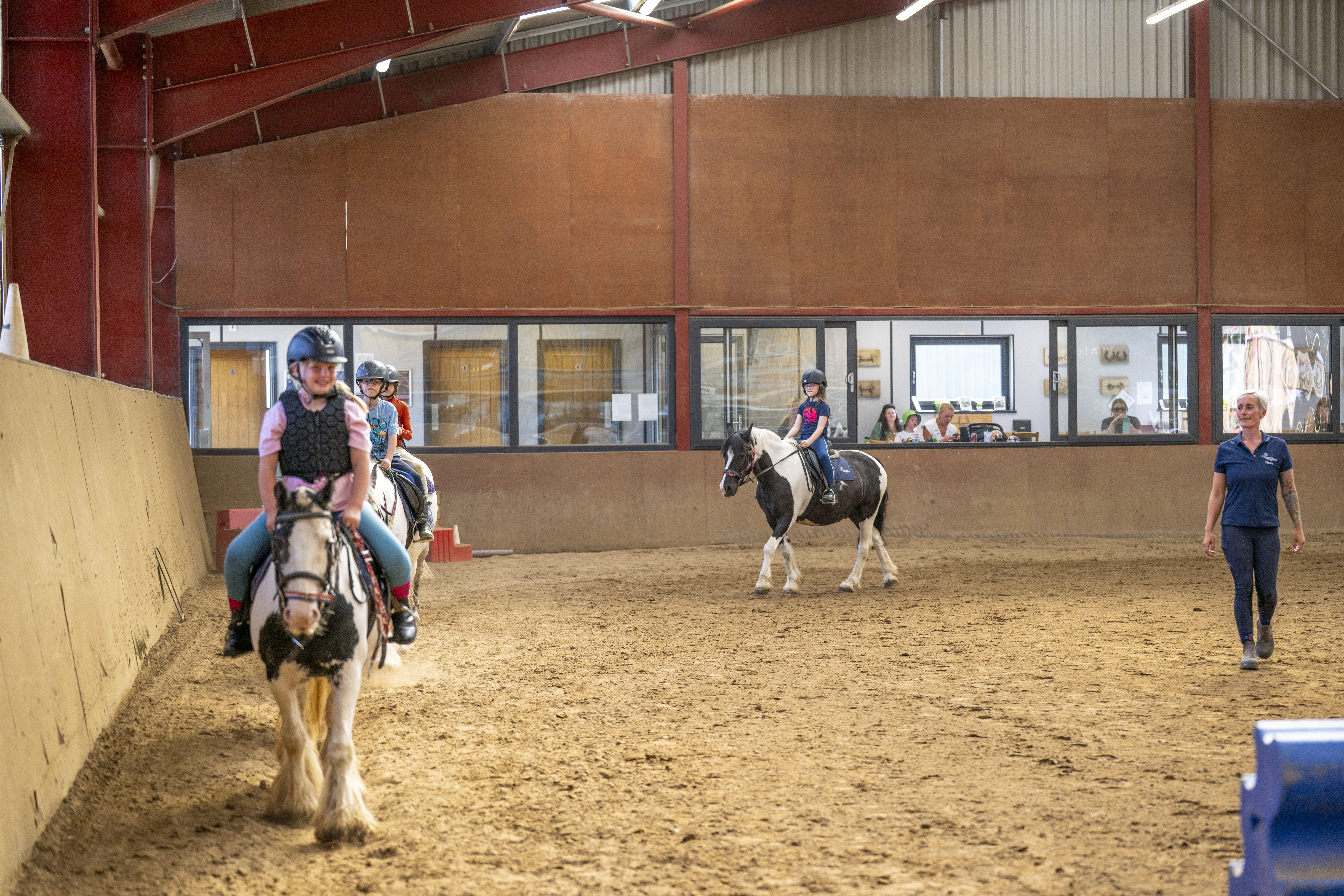
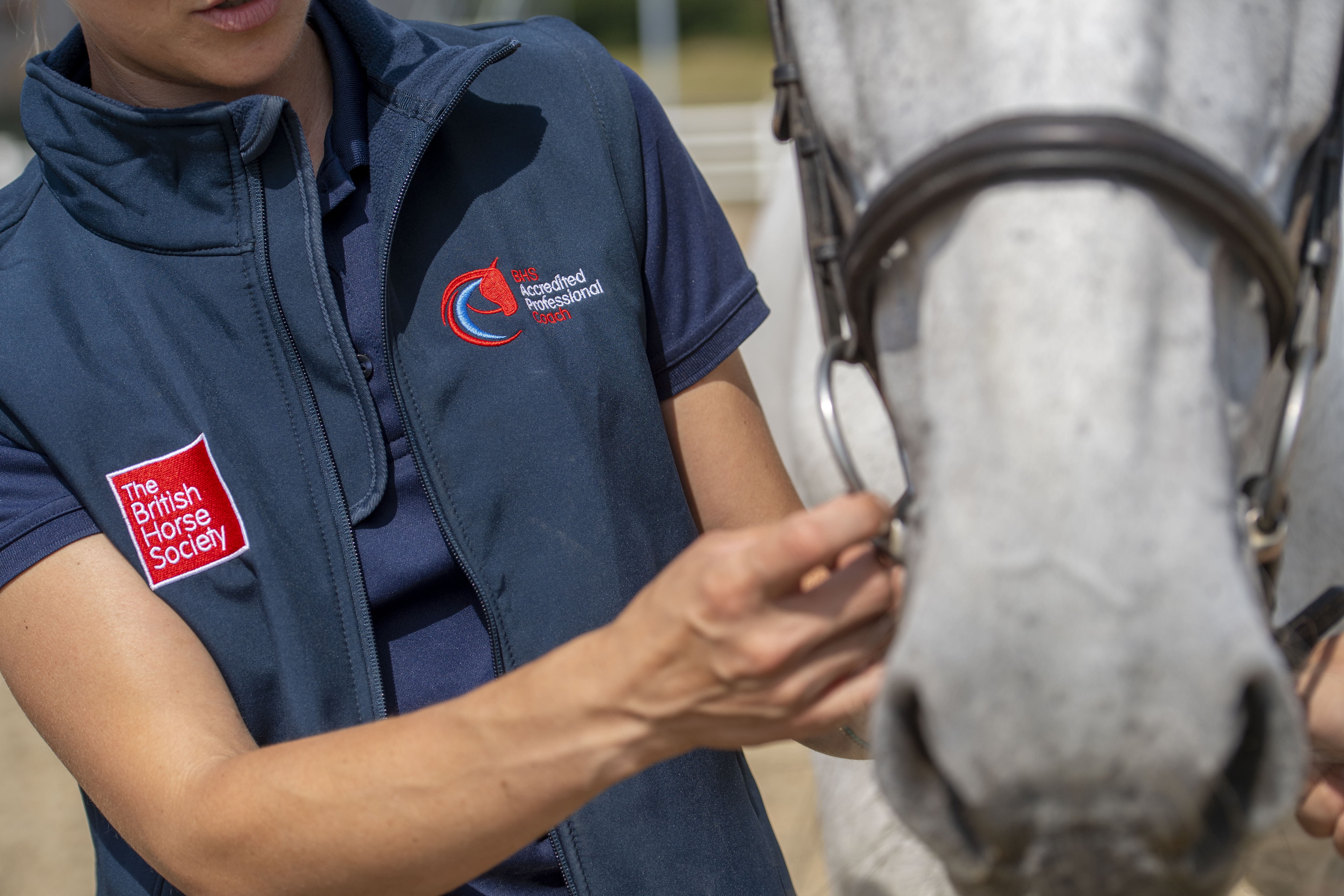
Whether it’s your very first lesson or you’re a regular rider, wearing the correct clothing and footwear is really important for your safety, comfort and enjoyment.
You don’t need to spend a fortune on specialist riding clothes when you first start, but there are a few important rules everyone must follow when riding at Smugglers Equestrian Centre.
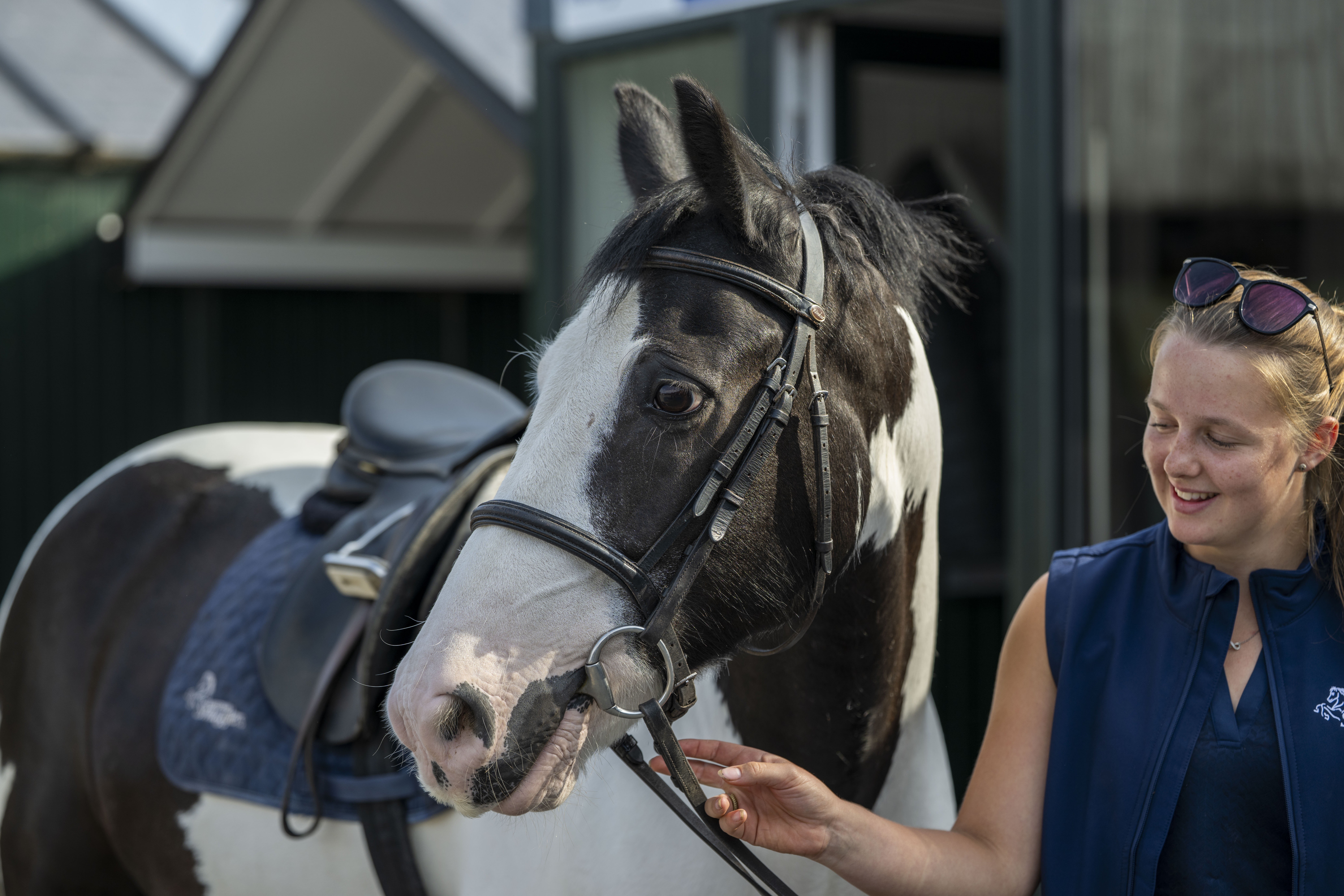
You don't need traditional riding clothes to have your first lesson. The most important thing is that your clothing is comfortable, practical and safe.
We recommend:
Clothing should allow you to move freely without having loose material that could catch on the saddle, equipment or surrounding objects.
A correctly fitted riding hat must be worn and securely fastened whenever you are mounted. If you have your own riding hat, it must meet one of the current accepted safety standards.
For 2026, BHS-accepted standards include:
Your hat must fit correctly and be in good condition. We strongly recommend having your hat professionally fitted by a qualified hat fitter.
Never buy a second-hand riding hat unless you can be completely certain of its history, as damage may not always be visible. A riding hat should be replaced following a significant impact or fall where the hat strikes the ground.
For cross-country activities, a jockey skull cap with no fixed peak must be worn.
Body protectors provide additional protection to the torso in the event of a fall, kick or impact.
The BHS strongly recommends wearing a body protector for ridden activities, and one is compulsory for cross-country activities.
Where a body protector is required at Smugglers, it must meet the current standard:
BETA Level 3 – Blue 2018 label Older BETA 2000 and 2009 standard body protectors are no longer accepted where a body protector is mandatory under current BHS rules.
Body protectors should fit correctly and ideally be professionally fitted.
Air jackets are additional protection and should not automatically be considered a replacement for a conventional body protector.
Where a body protector is mandatory, an air jacket must be worn over an approved Level 3 body protector unless it is an approved hybrid design.
Correct footwear is extremely important when riding because your foot needs to sit safely in the stirrup.
The best options are:
Riding footwear should have a smooth or appropriately designed sole and a defined heel of at least approximately ½ inch (1.25 cm). The heel helps reduce the risk of the foot slipping completely through the stirrup.
Please do not arrive expecting to ride in:
Some yard-style boots have deep tread patterns that can become caught in a stirrup and may therefore not be suitable for riding.
If you are unsure whether your footwear is suitable, please ask us before your lesson.
For safety reasons, please do not ride in:
Clothing should also be appropriate for the weather.
Riding lessons may take place outdoors, so please come prepared for the conditions.
For your safety, we recommend keeping jewellery to an absolute minimum when riding or handling horses.
Please remove:
The BHS advises that jewellery can create an injury risk in a practical equestrian environment.
Horse riding is an outdoor sport, so please check the forecast and dress accordingly! On colder days, wear several fitted layers rather than one very bulky coat.
In wet weather, a suitable fitted waterproof jacket is ideal. During warmer weather, lightweight riding clothing is recommended, but long trousers and covered shoulders are still required.
If you're completely new to riding, please don't feel that you need to buy a full riding wardrobe before your first lesson!
A suitable riding hat, safe footwear, comfortable long trousers and a top that covers your shoulders are the essentials.
As you progress, you may then choose to invest in jodhpurs or breeches, riding boots, gloves and other riding clothing.
If you're unsure whether something is suitable, just ask our team before your lesson — we'd much rather check beforehand than have you arrive wearing something that isn't safe to ride in.
Safe • Comfortable • Practical • Ready to Ride 🐴💙